


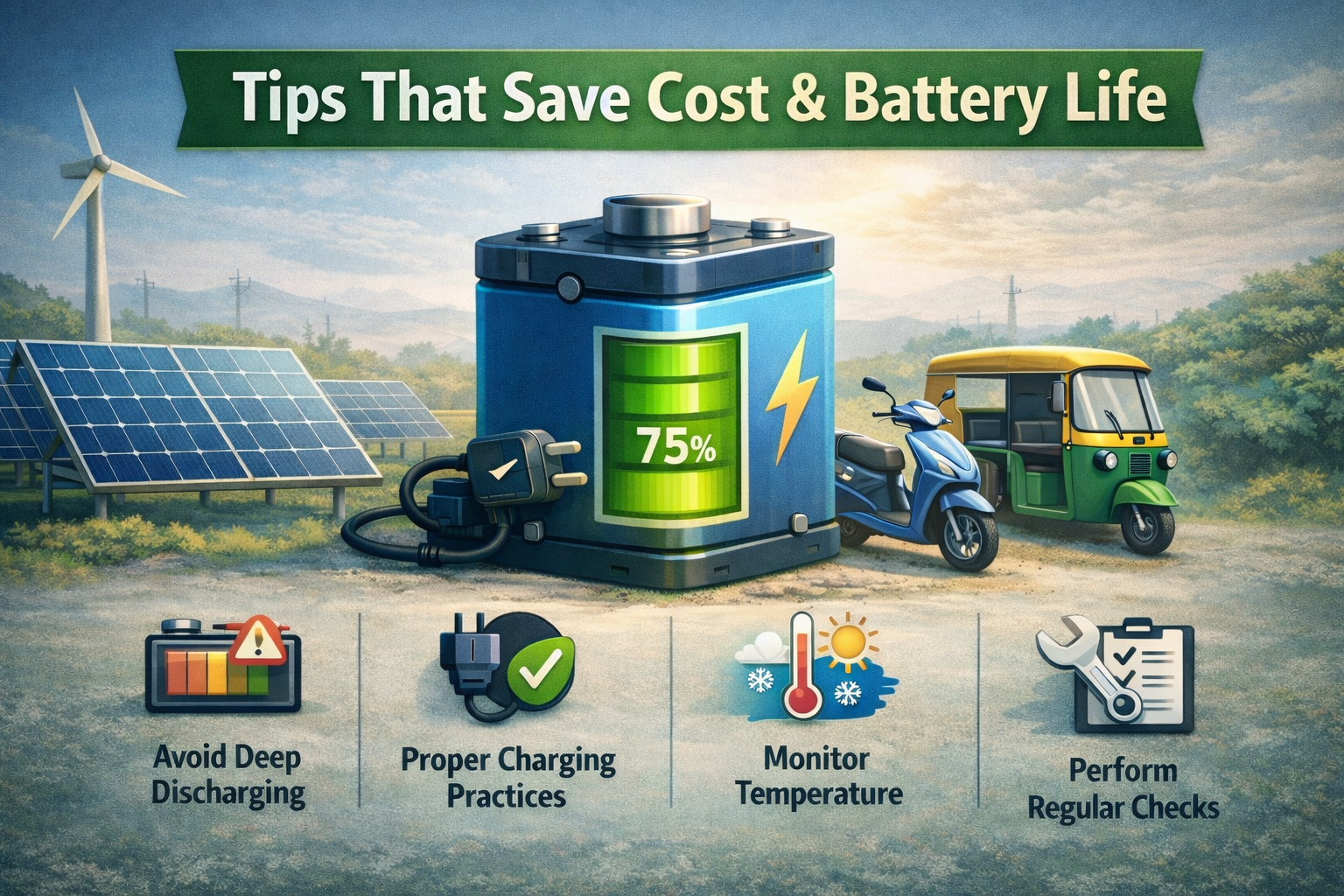
Lithium batteries have changed the way modern energy systems work. From solar storage and telecom backup to electric vehicles and industrial power solutions, lithium technology delivers higher efficiency, longer life cycles, and better performance compared to traditional batteries.
But here’s something many users overlook.
Even the best lithium battery will not deliver its full lifespan without proper maintenance.
Good battery maintenance is not complicated. A few simple practices can significantly improve battery performance, extend its life, and reduce unnecessary replacement costs.
Let’s break down the most important lithium battery maintenance tips every user should know.
1. Avoid Deep Discharging
One of the most common mistakes users make is allowing batteries to completely drain before recharging.
Lithium batteries perform best when they operate within a healthy charge range.
Repeated deep discharging puts stress on the cells and can shorten the battery’s overall cycle life.
Best practice:
Try to keep the battery charge between 20% and 80% whenever possible.
This operating range reduces stress on the battery and improves long-term performance.
2. Maintain Proper Charging Conditions
Charging conditions play a major role in battery health.
Using an incompatible charger or unstable power source can cause overheating, poor charging efficiency, or damage to the battery management system (BMS).
Always ensure:
- The charger is compatible with the lithium battery specifications
- Charging voltage and current match recommended values
- The charging environment has proper ventilation
A well-controlled charging process protects the battery and ensures consistent performance.
3. Monitor Temperature Levels
Temperature is one of the most critical factors affecting lithium battery life.
Extreme heat accelerates chemical degradation inside the cells, while extremely low temperatures can reduce battery capacity and efficiency.
Ideal operating temperature:
Generally, between 15°C to 35°C for most lithium battery systems.
To maintain battery health:
- Avoid placing batteries in direct sunlight
- Ensure proper airflow around battery systems
- Install batteries in temperature-controlled environments when possible
Temperature management alone can extend battery life by several years.
4. Use a Reliable Battery Management System (BMS)
A Battery Management System (BMS) acts as the brain of a lithium battery pack.
It monitors critical parameters such as:
- Voltage
- Current
- Temperature
- Cell balancing
A good BMS protects the battery from overcharging, deep discharge, and short circuits.
For industrial and commercial energy storage applications, a high-quality BMS is essential for safety and long-term performance.
5. Avoid Overloading the Battery
Every battery is designed for a specific load capacity.
Running loads that exceed the battery’s rated output forces the cells to work harder, which leads to overheating and faster degradation.
Before installing a battery system, always ensure:
- The battery capacity matches the application
- Load demand is properly calculated
- Peak loads are within safe limits
Proper system design helps maintain battery stability and extends service life.
6. Store Batteries Correctly When Not in Use
Sometimes batteries remain unused for weeks or months, especially in backup systems.
Improper storage conditions can slowly damage lithium cells.
For safe storage:
- Keep batteries at 40–60% charge level
- Store in a cool, dry place
- Avoid high-humidity environments
Periodic checks during storage help maintain battery readiness and prevent capacity loss.
7. Perform Periodic Health Checks
Even though lithium batteries require less maintenance than traditional batteries, periodic system checks are still important.
Routine monitoring helps detect small issues before they become costly failures.
Key things to check:
- Battery voltage levels
- Temperature readings
- Connection terminals
- Charging performance
For large battery systems used in solar or telecom infrastructure, scheduled inspections improve reliability and system uptime.
Why Proper Battery Maintenance Matters
A lithium battery is a long-term investment. With the right maintenance practices, it can deliver thousands of charge cycles and years of reliable performance.
Ignoring maintenance, on the other hand, can lead to:
- Reduced battery capacity
- Higher operational costs
- Frequent battery replacements
- Unexpected system downtime
Small preventive actions today can save high costs in the future.
The Likraft Approach to Reliable Lithium Batteries
At Likraft Batteries, we design lithium battery solutions that prioritise safety, durability, and long cycle life.
Our battery systems are built for demanding applications, including:
- Solar energy storage
- Electric mobility
- Telecom backup systems
- Industrial energy storage
With advanced Battery Management Systems (BMS) and high-quality lithium cells, Likraft batteries are engineered to deliver stable performance and long-term reliability.
Because when battery technology is built right—and maintained properly—it becomes a dependable power solution for years.
Send us an email at info@likraft.com
Address: Rai Industrial Area, Sonipat, Haryana
I liked the reminder to keep lithium batteries out of extreme heat and not let them sit fully discharged for long. That is a simple point, but it probably prevents a lot of avoidable battery damage over time.
It also felt like practical advice instead of vague battery talk, which I appreciated. Do you think storage habits matter more than charging habits for long term battery life?