


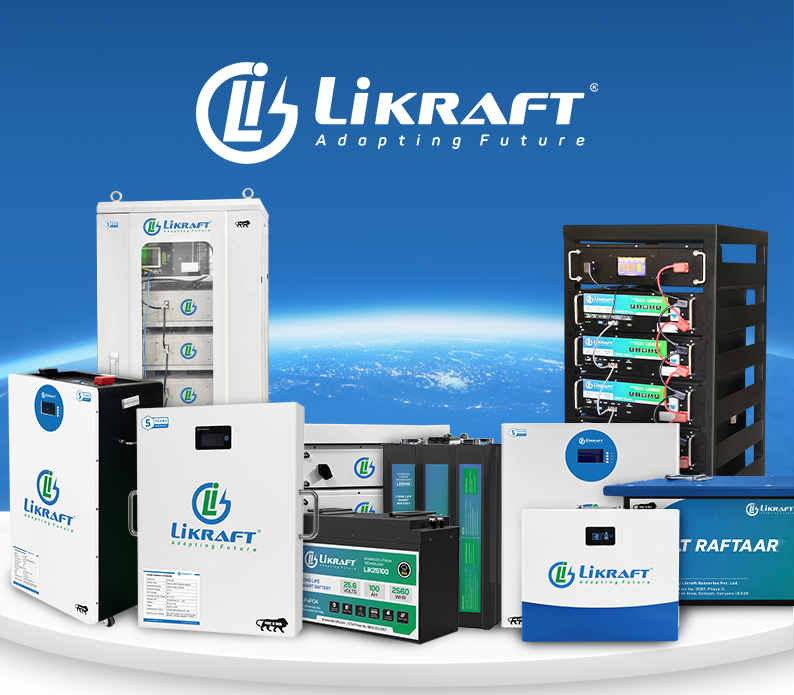
Lithium batteries are now used in electric vehicles, solar energy systems, inverter backup, telecom equipment, industrial machines, and energy storage systems. They have become an important part of the transition toward cleaner and more efficient energy.
But how does a lithium battery actually work?
A lithium battery does much more than store electricity. Inside the battery, lithium ions move between electrodes during charging and discharging, while an external electrical circuit carries electrons to and from the connected device.
Understanding how a lithium battery works can help you make better decisions when selecting a battery for an EV, solar system, inverter, or ESS.
In this guide, we explain the basic operating principle of lithium battery technology, the roles of the cells and the BMS, what happens during charging and discharging, and how LiFePO₄ batteries work.
What Is a Lithium Battery?
A lithium battery is an energy storage device that uses lithium-based electrochemical technology to store and release electrical energy.
A complete lithium battery pack typically contains multiple components, including:
- Lithium battery cells
- Battery Management System (BMS)
- Busbars and electrical connections
- Cables and connectors
- Protective components
- Enclosure
- Communication system, depending on the application
The cell is the fundamental electrochemical unit. Multiple cells can be connected in series and parallel to achieve the required voltage and capacity for a particular application.
For example, a battery manufacturer can configure cells to create battery packs for:
- Electric scooters
- Electric three-wheelers
- E-rickshaws
- Solar systems
- Inverters
- Telecom systems
- Industrial equipment
- Energy Storage Systems (ESS)
How Lithium Battery Technology Works
At the heart of lithium battery technology is the movement of lithium ions between two electrodes.
A typical rechargeable lithium-ion cell contains:
- Cathode
- Anode
- Electrolyte
- Separator
- Current collectors
During charging and discharging, lithium ions move through the electrolyte between the anode and cathode.
Electrons, however, cannot travel through the electrolyte in the same way. They move through the external electrical circuit, creating the electrical current that powers a connected device.
This controlled movement of ions and electrons is the basic principle behind rechargeable lithium batteries.
Main Components of a Lithium Battery Cell
1. Cathode
The cathode is one of the primary electrodes in the cell and contains the lithium-based active material.
Different lithium-ion chemistries use different cathode materials.
Examples include:
- Lithium Iron Phosphate (LiFePO₄)
- Nickel Manganese Cobalt (NMC)
- Lithium Manganese Oxide (LMO)
- Other lithium-based chemistries
The chemistry used in the cathode strongly influences characteristics such as energy density, cycle life, thermal behavior, power capability, and cost.
2. Anode
The anode is the other primary electrode.
Many commercial lithium-ion cells use graphite as the anode material.
During charging, lithium ions move from the cathode toward the anode, where they are stored within the anode material.
During discharge, the process reverses.
3. Electrolyte
The electrolyte provides a medium through which lithium ions can move between the electrodes.
It allows ionic movement while the external circuit provides the path for electrons.
The electrolyte is therefore an essential part of the electrochemical process.
4. Separator
The separator is a thin insulating layer positioned between the anode and cathode.
Its primary purpose is to help prevent direct electrical contact between the electrodes while allowing lithium ions to pass through.
This separation is critical to the safe operation of the cell.
5. Current Collectors
Current collectors transfer electrons between the active electrode materials and the external electrical circuit.
The materials and construction vary depending on the cell design.
What Happens When a Lithium Battery Is Charging?
Charging means electrical energy is being supplied to the battery so that it can store energy for later use.
During charging, lithium ions move from the cathode toward the anode.
At the same time, electrons move through the external charging circuit toward the anode.
A simplified charging process looks like this:
Charger → Battery → Lithium ions move toward the anode.
The battery’s charging system controls voltage and current according to the battery’s specifications.
The BMS also monitors important parameters and can provide protection if operating conditions move outside the permitted range.
Step-by-Step Lithium Battery Charging
Step 1: Charger Supplies Electrical Energy
The charger supplies the battery with controlled electrical power.
The charger must be compatible with the battery’s voltage, chemistry, and charging requirements.
Step 2: Lithium Ions Move Through the Electrolyte
Lithium ions move internally from the cathode toward the anode.
This stores energy in the electrochemical system.
Step 3: Electrons Move Through the External Circuit
Electrons move through the external electrical path created by the charger.
The movement of ions inside the cell and electrons through the external circuit occurs together as part of the charging process.
Step 4: BMS Monitors the Battery
The Battery Management System monitors parameters such as
- Cell voltage
- Pack voltage
- Charging current
- Temperature
- State of charge
- Protection conditions
In advanced battery systems, the BMS may also communicate with the vehicle controller, inverter, or other equipment through CAN, RS485, or Bluetooth.
What Happens When a Lithium Battery Is Discharging?
Discharging is essentially the reverse process.
When a battery is connected to a load, lithium ions move from the anode toward the cathode.
At the same time, electrons travel through the external circuit toward the load.
The external movement of electrons provides electrical energy to operate the connected equipment.
A simplified process is
Battery → External circuit → Load
The load could be:
- An electric motor
- Inverter
- Solar system
- Telecom equipment
- Industrial machine
- ESS power conversion system
Step-by-Step Lithium Battery Discharging
Step 1: Load Is Connected
The battery is connected to equipment that requires electrical energy.
For an EV, this could be the motor and associated electrical systems.
For an ESS, the battery may supply a power conversion system or inverter.
Step 2: Lithium Ions Move Toward the Cathode
Lithium ions move internally from the anode toward the cathode.
This electrochemical process releases stored energy.
Step 3: Electrons Flow Through the External Circuit
Electrons travel through the external circuit and provide electrical power to the connected load.
The battery therefore converts stored electrochemical energy into electrical energy.
Step 4: BMS Continues Monitoring
The BMS continues to monitor the battery during discharge.
If the battery reaches a defined protection limit, or if excessive current or abnormal temperature is detected, the BMS can take protective action according to its design.
Charging vs Discharging: What Is the Difference?
| Charging | Discharging |
|---|---|
| Electrical energy enters the battery. | Electrical energy leaves the battery. |
| Lithium ions move toward the anode. | Lithium ions move toward the cathode. |
| Batteries store energy. | Battery supplies energy. |
| The charger is the energy source. | The connected load receives energy. |
| BMS monitors charging conditions. | BMS monitors discharge conditions. |
The movement of lithium ions reverses between charging and discharging.
How Does a LiFePO₄ Battery Work?
LiFePO₄ battery technology is a type of lithium-ion battery chemistry based on lithium iron phosphate.
LiFePO₄ is widely used in applications where cycle life, thermal stability, reliability, and safety characteristics are important.
It is commonly used in:
- Solar energy storage
- ESS
- Inverter backup
- Telecom batteries
- Electric vehicles
- Industrial battery systems
The basic working principle remains the same:
During charging, lithium ions move toward the anode.
During discharging, lithium ions move back toward the cathode.
The difference comes from the specific materials and electrochemical characteristics of the chemistry.
Why Is LiFePO₄ Popular for Energy Storage?
LiFePO₄ batteries have several characteristics that make them suitable for stationary and mobile applications.
Long Cycle Life
LiFePO₄ cells can provide a high number of charge-discharge cycles when operated under appropriate conditions.
Thermal Stability
LiFePO₄ chemistry is known for favorable thermal stability compared with several other lithium-ion chemistries.
Consistent Performance
The chemistry can provide stable performance across repeated charging and discharging when the battery is properly designed and operated.
Suitable for ESS
These characteristics make LiFePO₄ a widely used chemistry for solar storage, inverter backup, telecom, and ESS applications.
Actual performance always depends on the cell, battery design, operating conditions, and manufacturer’s specifications.
What Is the Role of the BMS in a Lithium Battery?
A lithium battery pack needs more than cells.
The Battery Management System (BMS) is responsible for monitoring and protecting the battery according to its design.
A BMS can monitor:
- Individual cell voltages
- Battery pack voltage
- Charging current
- Discharging current
- Cell and pack temperature
- State of charge
- Fault conditions
Depending on the application, a smart BMS can also support communication through:
- CAN
- RS485
- Bluetooth
For example, in an ESS, communication between the battery BMS and inverter can help exchange important operating information.
Why Does a Lithium Battery Need Cell Balancing?
A battery pack can contain many individual cells.
Even cells manufactured to the same specification can have small differences in characteristics.
Over repeated charging and discharging, these differences can contribute to variations in cell voltage and state of charge.
Cell balancing helps manage these differences according to the BMS design.
Proper balancing can support consistent pack operation and help prevent an individual cell from reaching an undesirable voltage condition before the rest of the pack.
How Are Lithium Battery Cells Connected?
Individual cells can be connected in:
Series
Connecting cells in series increases the overall voltage.
Parallel
Connecting cells in parallel increases the available capacity and current capability.
Series + Parallel
Many practical battery packs use a combination of series and parallel connections to achieve the required voltage and capacity.
For example, a manufacturer may configure cells according to the required voltage and Ah rating for a particular EV, solar battery, or ESS.
What Determines a Lithium Battery’s Voltage?
Battery voltage is determined largely by the cell chemistry and the number of cells connected in series.
If the nominal voltage of an individual cell is known, connecting multiple cells in series increases the pack’s nominal voltage.
For example, a LiFePO₄ cell has a nominal voltage of approximately 3.2 V.
A typical 16-series LiFePO₄ configuration provides approximately:
16 × 3.2V = 51.2V nominal
This is why 51.2V lithium batteries are commonly found in solar, ESS, telecom, and other applications.
What Determines Lithium Battery Capacity?
Battery capacity is commonly expressed in ampere-hours (Ah).
Capacity indicates how much electrical charge the battery can deliver under specified conditions.
Energy capacity can be approximately estimated using:
Energy (Wh) = Voltage (V) × Capacity (Ah)
For example:
51.2V × 100Ah = 5,120Wh
or approximately:
5.12 kWh
This makes voltage and Ah together more useful when evaluating the energy capacity of a battery.
How Does a Lithium Battery Power an Electric Vehicle?
In an EV, the battery acts as the primary energy source for the electric drivetrain.
A simplified energy path is
Lithium Battery → BMS → Controller/Inverter → Motor → Vehicle Movement
When the vehicle is accelerating, the battery supplies electrical energy to the motor system.
When the vehicle is charging, electrical energy flows from the charger back into the battery.
Depending on the vehicle design, regenerative braking can also return some electrical energy to the battery.
How Does a Lithium Battery Work in a Solar System?
In a solar energy system, the battery stores electrical energy so it can be used when required.
A simplified system may look like this:
Solar Panels → Charge Controller/Inverter → Lithium Battery → Load
During periods when solar generation exceeds immediate demand, available energy can be stored in the battery.
Later, the stored energy can be used when solar generation is insufficient, depending on the system configuration.
This makes lithium batteries useful for increasing the flexibility and utilization of solar power.
How Does a Lithium Battery Work in an ESS?
An Energy Storage System (ESS) is more than just a battery.
A typical ESS can include:
- Battery modules
- BMS
- Power Conversion System (PCS) or inverter
- Energy Management System (EMS)
- Protection equipment
- Thermal management
- Communication systems
The battery stores electrical energy, while the other system components manage conversion, control, protection, and communication.
ESS applications can include:
- Solar energy storage
- Commercial backup power
- Industrial energy storage
- Peak-load management
- Telecom backup
- Grid-related energy applications
What Affects Lithium Battery Performance?
The working principle of a lithium battery is consistent, but performance depends on how the battery is designed and operated.
Important factors include:
1. Cell Quality
The quality and consistency of cells influence battery performance.
2. Temperature
Extreme temperatures can affect charging, discharging, capacity, and long-term aging.
3. Depth of Discharge
Repeatedly operating the battery at high depths of discharge can affect cycle life.
4. Charging Current
Charging current should remain within the battery’s specified limits.
5. Discharge Current
The battery should be appropriately sized for the application’s power requirements.
6. BMS Configuration
The BMS must be correctly matched to the battery cells and application.
7. Battery Design
Electrical connections, thermal management, enclosure design, protection systems, and manufacturing quality all contribute to the overall battery system.
Why Battery Manufacturing Quality Matters
Understanding how a lithium battery works also explains why battery manufacturing quality is important.
A battery pack is a complete engineered system. It is not enough to simply connect cells together.
A properly manufactured battery pack requires:
- Appropriate cell selection
- Correct series and parallel configuration
- Reliable electrical connections
- Correct BMS configuration
- Proper insulation
- Appropriate protection
- Thermal considerations
- Quality testing
- Application-specific design
The battery should be tested before being supplied for its intended application.
This becomes especially important for high-voltage ESS, industrial batteries, telecom systems, and EV applications.
Likraft Lithium Battery Technology
Likraft Batteries develops and manufactures lithium battery packs for multiple applications, including:
- Electric 2-wheelers
- Electric 3-wheelers
- E-rickshaws
- Loaders
- Solar systems
- Inverter backup
- Telecom
- Energy Storage Systems
- Industrial applications
Depending on the application, Likraft battery systems can incorporate LiFePO₄ technology, Smart BMS, CAN, RS485, Bluetooth monitoring, and application-specific configurations.
Battery packs can be developed according to required voltage, Ah capacity, dimensions, communication requirements, and application conditions.
For businesses looking for an EV battery manufacturer, a LiFePO₄ battery manufacturer, or a lithium battery manufacturer in India, understanding the complete battery architecture is important before selecting a supplier.
Conclusion
So, how a lithium battery works can be summarized through the movement of lithium ions and electrons.
During charging, lithium ions move toward the anode, and energy is stored in the battery. During discharging, the ions move back toward the cathode while electrons flow through the external circuit to power the connected equipment.
But modern lithium battery technology is more than electrochemical cells. A reliable battery pack also requires a properly designed BMS, suitable electrical connections, protection systems, thermal considerations, and appropriate manufacturing and testing processes.
For applications such as EVs, solar systems, inverters, telecom, and ESS, selecting the right battery chemistry and configuration is essential.
From cell chemistry to BMS and final testing, every part of the battery system matters.
Send us an email at info@likraft.com.
Address: Rai Industrial Area, Sonipat, Haryana