


Selecting the right battery size is one of the most important decisions when designing a solar power system. A battery that is too small may not provide sufficient backup, while an oversized battery can increase system costs unnecessarily.
Understanding battery capacity requirements helps ensure reliable performance, better energy management, and long-term savings.
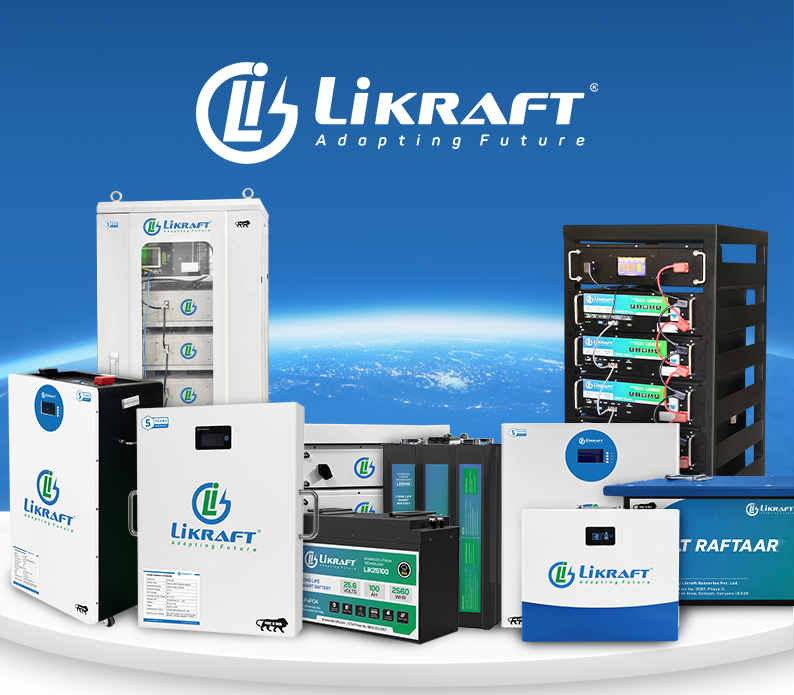
At Likraft Batteries Pvt. Ltd., we help customers choose the right lithium battery solutions for residential, commercial, and industrial solar applications. This guide explains how to calculate the battery capacity you need and the factors that affect solar battery sizing.
What Does Ah Mean in a Solar Battery?
Ah (ampere-hour) is a measurement of battery capacity.
It indicates the amount of current a battery can supply over a specific period.
For example:
- A 100Ah battery can theoretically provide 100 amps for 1 hour.
- A 100Ah battery can also provide 10 amps for 10 hours.
The higher the Ah rating, the greater the energy storage capacity of the battery.
Why Is Proper Battery Sizing Important?
Correct battery sizing helps:
- Ensure adequate backup during power outages
- Support daily energy requirements
- Improve battery life
- Reduce system costs
- Enhance solar system efficiency
An accurately sized battery system delivers reliable power without unnecessary overspending.
Step 1: Calculate Your Daily Energy Consumption
Begin by listing all appliances that will run on the solar battery.
Example:
| Appliance | Power Rating | Usage Time | Daily Consumption |
|---|---|---|---|
| LED Lights | 100W | 5 Hours | 500Wh |
| Fans | 150W | 8 Hours | 1200Wh |
| Television | 120W | 4 Hours | 480Wh |
| Refrigerator | 200W | 8 Hours | 1600Wh |
Total Daily Consumption = 3,780Wh
Step 2: Determine Required Backup Hours
Next, estimate how long the battery should provide power.
Examples:
- 4 hours backup
- 8 hours backup
- Overnight backup
- Full-day backup
The longer the backup requirement, the larger the battery capacity needed.
Step 3: Convert Watt-Hours to Ampere-Hours
Battery capacity can be calculated using:
Battery Capacity (Ah) = Energy Requirement (Wh) ÷ Battery Voltage (V)
For a 51.2V lithium battery:
3,780Wh ÷ 51.2V = 73.8Ah
A battery around 80Ah would typically meet this requirement.
Step 4: Add a Safety Margin
Solar systems experience:
- Weather variations
- Load fluctuations
- Future expansion requirements
Adding a 15–25% safety margin is recommended.
In the above example:
80Ah + 20% reserve = 96Ah
A 100Ah lithium battery would be an ideal choice.
Factors That Affect Solar Battery Size
- Daily Power Consumption
The more energy your appliances consume, the larger the battery capacity required.
- Backup Duration
Longer backup requirements demand larger battery banks.
- Battery Voltage
Higher-voltage battery systems require fewer ampere-hours to deliver the same energy.
Common lithium battery voltages include:
- 12.8V
- 25.6V
- 48V
- 51.2V
- Solar Panel Capacity
The battery size should align with the solar panel system’s charging capability.
An oversized battery with insufficient solar generation may not charge efficiently.
- Future Expansion
If additional appliances may be added later, selecting a slightly larger battery can provide flexibility.
Why Lithium Batteries Are Ideal for Solar Applications
Modern solar systems increasingly use lithium batteries because they offer:
- Higher Usable Capacity
Lithium batteries allow deeper discharge compared to traditional batteries.
- Faster Charging
They recharge more quickly using available solar energy.
- Longer Life
Lithium batteries typically provide thousands of charge-discharge cycles.
- Low Maintenance
No regular water topping or maintenance is required.
- Compact Design
Higher energy density means more power in less space.
Recommended Battery Capacities for Common Applications
| Application | Recommended Capacity |
|---|---|
| Small Home Solar System | 50Ah – 100Ah |
| Medium Residential Setup | 100Ah – 200Ah |
| Large Home Backup | 200Ah – 300Ah |
| Commercial Solar System | 300Ah+ |
| Industrial Energy Storage | Custom Sizing |
Actual battery requirements depend on load and backup expectations.
Common Mistakes to Avoid
When sizing a solar battery, avoid:
- Ignoring future energy needs
- Choosing capacity based only on budget
- Not accounting for backup duration
- Using incorrect voltage calculations
- Oversizing without evaluating charging capability
Proper planning ensures better system performance and return on investment.
How Likraft Helps with Solar Battery Sizing
At Likraft Batteries, we provide lithium battery solutions designed for:
- Residential solar systems
- Commercial energy storage
- Industrial backup applications
- Telecom power systems
- Hybrid solar installations
Our team helps customers identify the right battery capacity based on actual energy requirements and backup goals.
Conclusion
Choosing the correct solar battery size is essential for maximizing performance, reliability, and energy savings.
By understanding your daily power consumption, backup requirements, and system voltage, you can accurately determine the battery capacity needed for your solar setup.
A properly sized lithium battery not only delivers dependable backup but also improves the overall efficiency of your solar energy system.
Send us an email at info@likraft.com
Address: Rai Industrial Area, Sonipat, Haryana