


Energy demand is changing quickly. Homes, offices, factories, commercial buildings, and renewable energy projects increasingly need reliable ways to store electricity and use it when required.
This is where an Energy Storage System (ESS) comes in.
An ESS stores electrical energy and makes it available when power is needed. Modern ESS solutions commonly use lithium-ion batteries, intelligent Battery Management Systems (BMS), power conversion equipment, and energy management controls to deliver reliable and efficient power.
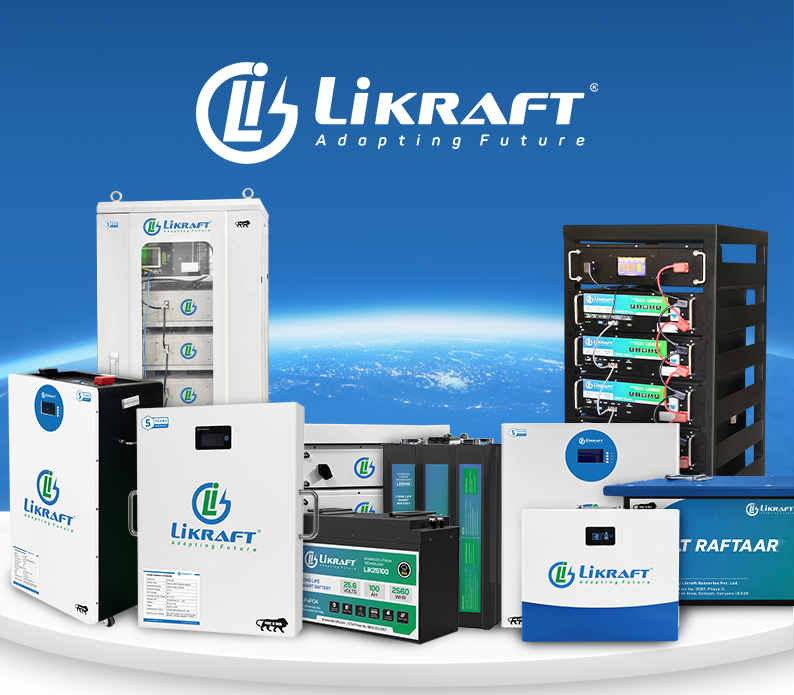
At Likraft Batteries Pvt. Ltd., we develop lithium battery solutions for energy storage, solar, backup power, telecom, EVs, and industrial applications. In this guide, we’ll explain what an ESS is, how it works, its major components, and why lithium battery-based ESS is becoming an important part of modern energy infrastructure.
What Is an Energy Storage System?
An Energy Storage System (ESS) is a complete system designed to store electrical energy and release it when required.
Energy can be stored from different sources, including:
- Solar power systems
- The electrical grid
- Generators
- Other renewable energy sources
The stored energy can then be used during:
- Power cuts
- Peak-demand periods
- Night-time
- Grid interruptions
- High-load conditions
A modern ESS is more than just a battery. It combines battery storage with electronic controls and power conversion equipment to manage energy safely and efficiently.
How Does an ESS Work?
The basic working process is simple:
1. Energy Generation
Electricity is generated by solar panels, the grid, or another power source.
2. Energy Conversion
Power electronics convert electricity into the appropriate form for battery charging.
3. Energy Storage
The battery stores the electrical energy for later use.
4. Battery Monitoring
The BMS monitors parameters such as voltage, current, temperature, and cell condition.
5. Energy Discharge
When power is required, the stored energy is converted and supplied to connected loads.
6. Energy Management
An energy management system can determine when to charge, discharge, store, or use available energy based on system requirements.
Main Components of an Energy Storage System
A complete ESS normally consists of several important components.
Lithium Battery Pack
The battery is the primary energy storage component.
Lithium batteries, particularly LiFePO₄-based systems, are widely used for ESS applications because of their cycle life, efficiency, energy density, and suitability for repeated charging and discharging.
Battery Management System (BMS)
The BMS is responsible for monitoring and protecting the battery.
It can monitor:
- Cell voltage
- Pack voltage
- Current
- Temperature
- State of Charge (SOC)
- Battery protection conditions
Depending on the system design, the BMS may also support communication through protocols such as CAN or RS485.
Power Conversion System (PCS)
The PCS manages the conversion between AC and DC power.
During charging, it converts power into the form required by the battery. During discharge, it converts stored DC energy into usable AC power when required by the connected system.
Energy Management System (EMS)
An EMS helps control how energy flows through the ESS.
It can be used to manage:
- Charging schedules
- Discharging schedules
- Solar energy utilization
- Peak load management
- Backup operation
- Grid interaction
Thermal Management
Battery temperature has a direct impact on performance and battery life.
Depending on the ESS size and application, thermal management may involve appropriate ventilation, cooling, monitoring, or other temperature-control methods.
Why Lithium Batteries Are Used in ESS
Lithium batteries have become an important technology for modern energy storage because they offer several advantages.
Long Cycle Life
ESS applications often involve regular charging and discharging. Lithium battery technology can provide a high number of cycles when operated within recommended conditions.
High Efficiency
Lithium batteries can provide efficient energy storage and discharge, helping reduce energy losses within the storage system.
Compact Design
Lithium batteries can offer high energy storage in a relatively compact footprint compared with traditional lead-acid battery systems.
Low Maintenance
Lithium battery systems generally require less routine maintenance than flooded lead-acid systems.
Intelligent Monitoring
Modern lithium ESS solutions can integrate smart BMS technology for continuous monitoring and protection.
ESS for Homes
Residential energy storage is becoming increasingly useful for homeowners with solar systems or unreliable grid supply.
A home ESS can store electricity during the day and provide power later when required.
For example:
Solar panels → ESS → Home loads
During the day, excess solar energy can be stored instead of being immediately unused. Later, the stored energy can support household loads.
A home ESS can help with:
- Solar energy storage
- Evening power usage
- Backup during outages
- Better use of generated solar energy
- Energy management
ESS for Businesses
Businesses often need reliable electricity to keep operations running.
An ESS can provide backup and energy management for:
- Offices
- Retail stores
- Warehouses
- Commercial buildings
- Manufacturing facilities
- Data and communication infrastructure
Depending on the system design, an ESS can support critical loads during grid interruptions and help businesses manage their energy consumption.
ESS for Solar Power Systems
Solar energy production changes throughout the day. Solar panels generate electricity during sunlight hours, while electricity demand may continue after sunset.
An ESS helps bridge this gap.
Without Energy Storage
Solar generation → Immediate consumption
With Energy Storage
Solar generation → Immediate consumption + Battery charging → Stored energy → Later consumption
This makes solar power more flexible and useful.
What Is a BESS?
You may also come across the term “BESS,” which stands for Battery Energy Storage System.
A BESS is a type of ESS that specifically uses batteries as the energy storage technology.
In the lithium battery industry, BESS is commonly used for:
- Solar storage
- Commercial backup
- Industrial energy storage
- Grid support
- Renewable energy integration
In simple terms:
ESS = Energy Storage System
BESS = Battery Energy Storage System
Low-Voltage vs. High-Voltage ESS
ESS solutions can be designed at different voltage levels depending on the application.
Low-Voltage ESS
Low-voltage systems are commonly used for:
- Homes
- Small commercial installations
- Solar backup
- Inverter applications
Likraft offers lithium battery solutions designed for low-voltage energy storage applications.
High-Voltage ESS
High-voltage systems are suitable for larger energy storage requirements and can be used in:
- Commercial facilities
- Industrial applications
- Large solar systems
- Higher-power energy storage projects
The right voltage depends on the inverter or PCS, required power, energy capacity, installation requirements, and application.
Understanding ESS Capacity: kW vs. kWh
Two terms are especially important when selecting an ESS: kW and kWh.
kW — Power
kW indicates how much power the system can deliver at a given time.
kWh — Energy
kWh indicates how much energy the battery can store.
For example, a battery system with a larger kWh capacity can generally provide energy for a longer period, while the required kW rating depends on the power demand of the connected loads.
This distinction is important when sizing an ESS for a home or business.
How to Choose the Right ESS
Before selecting an energy storage system, consider:
1. Required Backup Time
How many hours do you need the system to operate during a power interruption?
2. Connected Load
Calculate the power requirements of the equipment you want to operate.
3. Required Energy Capacity
Determine the required kWh based on your load and desired backup duration.
4. Charging Source
Decide whether the ESS will be charged from:
- Solar
- Grid
- Generator
- A combination of sources
5. Battery Chemistry
LiFePO4 is widely used for stationary lithium battery applications because of its safety characteristics and cycle-life potential.
6. Communication & Monitoring
For advanced installations, features such as BMS communication, CAN, RS485, remote monitoring, and system-level controls can be important.
7. Installation Environment
Temperature, ventilation, available space, indoor/outdoor installation, and environmental conditions should all be considered.
Likraft Lithium ESS Solutions
At Likraft Batteries, we manufacture lithium battery solutions for modern energy storage applications.
Our ESS battery solutions are designed around:
- Lithium battery technology
- LiFePO₄ chemistry
- Intelligent BMS
- Reliable cell configuration
- Quality components
- Application-specific battery design
- CAN and RS485 communication options, depending on the model
Our product portfolio includes solutions for residential, commercial, and industrial energy storage requirements.
Why Choose Likraft for ESS?
Choosing an ESS is not simply about selecting a battery with a particular voltage or Ah rating. The complete system needs to be designed around the application’s power, energy, charging, safety, and communication requirements.
Likraft focuses on:
- Lithium battery manufacturing
- Custom battery configurations
- EV and ESS battery solutions
- Smart BMS technology
- Quality testing
- Application-specific engineering
- Technical support
Our objective is to provide dependable battery solutions that can integrate effectively into modern energy systems.
Benefits of Energy Storage Systems
A properly designed ESS can help homes and businesses:
- Store renewable energy
- Improve energy utilization
- Reduce dependence on the grid
- Provide backup power
- Support critical loads
- Manage energy consumption
- Improve solar self-consumption
- Reduce power interruptions
The actual benefits depend on the system design, local electricity tariffs, load profile, solar generation, and operating strategy.
The Future of Energy Storage in India
India’s growing adoption of solar power, electric mobility, distributed energy, and renewable energy is increasing the need for reliable energy storage.
Energy storage can help address the difference between when electricity is generated and when it is needed.
From residential solar backup to large commercial and industrial installations, lithium battery-based ESS solutions are expected to play an increasingly important role in India’s energy infrastructure.
Conclusion
An Energy Storage System (ESS) is much more than a battery. It is an integrated solution that combines battery storage, BMS, power conversion, monitoring, and energy management to store and deliver electricity when it is needed.
For homes, businesses, solar installations, and industrial applications, the right ESS can provide reliable backup, better use of renewable energy, and improved control over electricity consumption.
At Likraft Batteries, we are committed to developing lithium battery solutions that support India’s growing demand for efficient, reliable, and intelligent energy storage.
Send us an email at info@likraft.com
Address: Rai Industrial Area, Sonipat, Haryana