


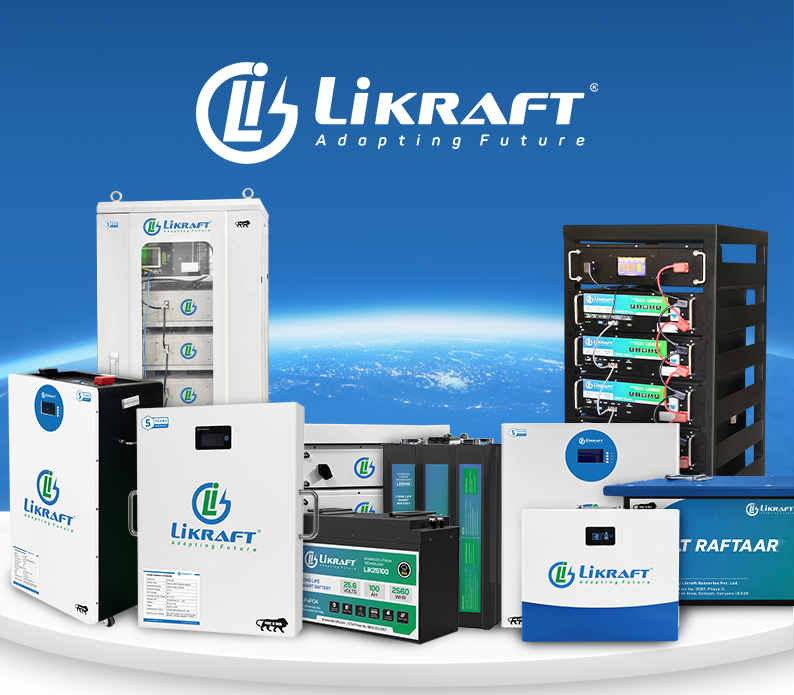
Lithium batteries are widely used in electric vehicles, solar energy systems, inverters, energy storage systems, telecom applications, and many other modern power solutions. Compared with traditional lead-acid batteries, lithium batteries can offer longer cycle life, better usable capacity, lower maintenance, and more consistent performance.
However, battery life does not depend only on the battery chemistry. Charging habits, operating temperature, depth of discharge, load conditions, storage, and battery management all affect how long a lithium battery performs reliably.
Whether you are using a lithium battery for an electric scooter, e-rickshaw, solar inverter, or ESS, the right operating practices can help you get more useful life from your battery.
In this guide, we explain 10 practical ways to increase lithium battery life.
1. Avoid Deep Discharging the Battery Regularly
One of the simplest ways to protect a lithium battery is to avoid repeatedly draining it to a very low state of charge.
Every battery has a usable operating range. Regularly taking the battery close to its minimum voltage can put additional stress on the cells and reduce long-term performance.
For everyday use, it is generally better to recharge the battery before it reaches a critically low state of charge.
Practical tip:
Do not make a habit of completely draining your lithium battery before every recharge. Follow the manufacturer’s recommended operating range.
For EVs, this means charging the battery when the state of charge becomes reasonably low instead of waiting until the vehicle stops.
2. Use the Correct Charger
The charger is an important part of a lithium battery system.
Using an incorrect charger can result in improper charging voltage or current. Over time, this can affect battery performance and may create unnecessary stress on the cells.
Always use a charger designed for the specific battery voltage, chemistry, and charging requirements.
For example, a battery pack designed for a particular LiFePO₄ voltage range should be charged using a charger configured for that battery.
Practical tip:
Check these specifications before charging:
- Battery chemistry
- Nominal voltage
- Maximum charging voltage
- Recommended charging current
- Charger compatibility
- Manufacturer’s charging instructions
Avoid using random or incompatible chargers simply because the connector fits.
3. Keep the Battery Away From Extreme Temperatures
Temperature has a major effect on lithium battery performance and life.
Very high temperatures can accelerate battery degradation, while very low temperatures can affect charging and discharge performance.
Lithium batteries generally perform best within the operating temperature range specified by the manufacturer.
For example, leaving an EV battery exposed to intense heat for long periods can increase thermal stress. Similarly, charging a lithium battery at very low temperatures can be problematic for some lithium-ion chemistries.
Practical tip:
- Avoid unnecessary exposure to direct sunlight.
- Keep battery enclosures properly ventilated.
- Do not place batteries near high-heat sources.
- Follow the manufacturer’s temperature limits.
- Do not charge a battery outside its specified charging temperature range.
Good thermal management is particularly important for EVs, ESS, and high-power applications.
4. Avoid Overloading the Battery
A battery has a specified continuous and peak discharge capability.
If a battery is consistently forced to supply more current than it is designed for, the cells can experience additional electrical and thermal stress.
This is why battery selection should always consider the actual load.
For example, an EV battery should be matched with the motor controller and vehicle requirements. Similarly, an ESS battery should be properly sized according to the inverter or load requirements.
Practical tip:
Before selecting a lithium battery, consider:
Load power + operating voltage + required backup time + peak current
Choosing the right battery capacity and discharge rating can help prevent unnecessary stress.
5. Do Not Ignore the Battery Management System (BMS)
The Battery Management System (BMS) is one of the most important components inside a modern lithium battery pack.
A BMS monitors important battery parameters such as:
- Cell voltage
- Pack voltage
- Charging and discharging current
- Temperature
- State of charge
- Protection conditions
Depending on the battery design, the BMS can also provide communication through interfaces such as CAN, RS485, or Bluetooth.
A properly configured BMS can help protect the battery against conditions such as overcharge, over-discharge, overcurrent, and abnormal temperature.
Practical tip:
Do not bypass, disable, or modify the BMS without proper technical knowledge. If the battery shows a protection warning, identify the cause instead of repeatedly resetting the system.
6. Use the Battery Within Its Recommended Load Range
Battery life is also influenced by how hard the battery is used.
Two batteries with the same voltage and Ah rating can experience different levels of stress depending on the application.
For example, an EV that frequently operates under heavy loads, steep inclines, high acceleration, or high ambient temperatures may place greater demands on its battery than a vehicle used under lighter conditions.
The same principle applies to solar and ESS applications.
Practical tip:
If your application regularly requires high power, select a battery specifically designed for that duty cycle rather than choosing a battery only based on Ah capacity.
7. Store the Battery Properly When It Is Not in Use
If you are not going to use a lithium battery for an extended period, proper storage matters.
Leaving a battery completely discharged for a long time can be harmful. On the other hand, keeping a battery at a very high state of charge for extended periods can also contribute to aging.
For long-term storage, follow the battery manufacturer’s recommended state of charge and storage temperature.
Practical tip:
For stored batteries:
- Keep them in a dry environment.
- Avoid extreme temperatures.
- Do not store them completely discharged.
- Check the battery periodically according to manufacturer guidelines.
- Follow the recommended storage state of charge.
8. Choose Quality Cells and Components
Battery life starts with the quality of the battery pack itself.
A lithium battery is not simply a collection of cells. It is a complete system consisting of cells, BMS, busbars, connectors, wiring, enclosure, protection components, and other electrical and mechanical elements.
The quality and consistency of the cells are especially important because cells with significant variations can create imbalance within the pack.
Using A-grade cells from reliable sources, appropriate BMS protection, and properly designed battery packs can support consistent performance.
Practical tip:
When purchasing a lithium battery, ask the manufacturer about:
- Cell chemistry
- Cell quality and grade
- BMS specification
- Protection features
- Cell balancing
- Testing process
- Warranty
- Battery operating conditions
Do not judge a battery only by its Ah rating or purchase price.
9. Keep Connections and the Battery Pack in Good Condition
Electrical connections also affect battery performance.
Loose terminals, damaged connectors, poor-quality cables, or unsuitable wiring can increase resistance and generate unwanted heat during operation.
For EVs, industrial batteries, solar systems, and ESS installations, proper installation is particularly important.
Practical tip:
During routine inspection, look for:
- Loose connections
- Damaged cables
- Corrosion
- Connector damage
- Unusual heating
- Physical damage to the enclosure
If you notice swelling, smoke, unusual smell, severe heating, leakage, or other abnormal behavior, stop using the battery and contact a qualified service professional.
10. Follow the Manufacturer’s Recommended Charging and Operating Practices
There is no single charging or usage rule that applies to every lithium battery.
Battery chemistry, cell design, BMS settings, voltage configuration, capacity, application, and operating environment all matter.
A LiFePO4 battery used in an ESS may have different operating requirements from a lithium battery designed for an electric scooter.
That is why the manufacturer’s specifications should always be the first reference.
Practical tip:
Keep the battery manual or technical datasheet available and follow the recommended:
- Charging voltage
- Charging current
- Discharge current
- Operating temperature
- Storage conditions
- Installation requirements
- Maintenance and service procedures
Following the correct operating conditions is one of the easiest ways to avoid unnecessary battery degradation.
Bonus Tip: Monitor Battery Performance
Modern lithium batteries can provide useful information through their BMS and communication systems.
Depending on the battery, users may be able to monitor parameters such as:
- State of charge
- Voltage
- Current
- Temperature
- Charging status
- Protection status
- Battery alarms
Communication technologies such as Bluetooth, CAN, and RS485 can make monitoring and system integration easier.
Regular monitoring can help identify unusual behavior before it becomes a bigger problem.
What Reduces Lithium Battery Life?
Several factors can accelerate battery degradation.
| Factor | Possible Effect |
|---|---|
| Frequent deep discharge | Increased cell stress |
| Incorrect charging voltage | Charging-related stress |
| Excessive heat | Faster aging |
| Very low-temperature charging | Can damage certain lithium chemistries |
| Continuous overloading | Higher electrical and thermal stress |
| Poor-quality cells | Reduced consistency and lifespan |
| Improper BMS settings | Inadequate battery protection |
| Long-term improper storage | Capacity and performance loss |
| Poor electrical connections | Heat and power loss |
| Incorrect installation | Performance and safety problems |
The important point is that battery degradation is usually influenced by multiple operating conditions, not just one factor.
How Long Can a Lithium Battery Last?
There is no single lifespan that applies to every lithium battery.
Battery life depends on factors such as:
- Cell chemistry
- Cell quality
- Depth of discharge
- Charging conditions
- Operating temperature
- Charge and discharge current
- Usage frequency
- BMS design
- Application
- Storage conditions
Cycle-life specifications should also be understood correctly.
For example, if a manufacturer specifies a certain number of cycles at a particular Depth of Discharge (DOD), that rating applies under the stated test conditions. Real-world performance can vary depending on how the battery is operated.
This is why comparing batteries only by a single cycle-life number can be misleading.
How Likraft Helps Improve Lithium Battery Reliability
At Likraft Batteries, battery performance is approached as a complete system rather than focusing only on cell capacity.
Likraft manufactures lithium battery packs for applications including electric vehicles, solar systems, inverter backup, telecom, and energy storage systems.
Depending on the product, Likraft battery solutions can include features such as:
- LiFePO4 cell technology
- Smart BMS
- CAN communication
- RS485 communication
- Bluetooth monitoring
- Cell balancing and protection
- Application-specific battery configurations
- Custom voltage and Ah requirements
- Battery testing before dispatch
The battery pack is designed according to the requirements of its intended application, helping ensure that the cells, BMS, electrical components, enclosure, and operating conditions work together properly.
For businesses requiring customized battery solutions, choosing an experienced lithium battery manufacturer in India can also make it easier to match the battery with the vehicle, inverter, ESS, solar system, or other equipment.
Conclusion
Increasing lithium battery life is not about following one special trick. It comes down to consistent and correct battery usage.
Use the right charger, avoid unnecessary deep discharge, control temperature, stay within the recommended load range, protect the battery through a properly configured BMS, and store it correctly when it is not being used.
Most importantly, choose a battery built with appropriate cells, electronics, and protection systems for the application.
Whether you need a battery for an electric scooter, e-rickshaw, solar inverter, telecom system, or ESS, correct battery selection and operating practices can make a significant difference to long-term performance.
Choose the right lithium battery. Use it correctly. Monitor it regularly.
Send us an email at info@likraft.com.
Address: Rai Industrial Area, Sonipat, Haryana