


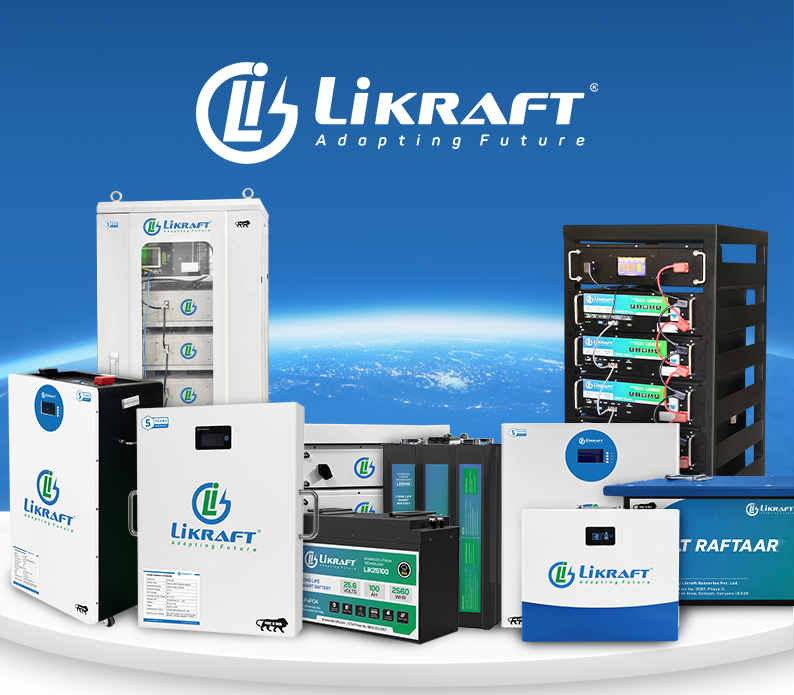
Not every vehicle, machine, or energy-storage system can use the same lithium battery.
An electric scooter needs a compact battery with a specific voltage and discharge capability. An e-rickshaw needs a different capacity and operating profile. A solar energy storage system may need a larger battery with communication between the BMS and inverter. Industrial equipment may require a completely different voltage, size, connector, or mounting arrangement.
This is where custom lithium battery packs become important.
Instead of selecting a standard battery and adjusting the application around it, manufacturers can design a battery pack around the actual requirements of the equipment.
What Is a Custom Lithium Battery Pack?
A custom lithium battery pack is a battery designed according to the electrical, mechanical, and operational requirements of a particular application.
Customization can involve:
- Voltage
- Capacity (Ah)
- Energy (kWh)
- Dimensions
- Cell chemistry
- Charging current
- Discharge current
- BMS configuration
- Communication protocol
- Connector type
- Enclosure
- Mounting arrangement
For OEMs, this approach can help create a battery that fits the available space and works correctly with the vehicle, inverter, controller, or machine.
Why Do Different Applications Need Different Batteries?
Battery requirements change from one application to another.
For example, an electric scooter may prioritize low weight and compact dimensions, while an industrial battery may prioritize high energy capacity and continuous power output.
A telecom battery may need reliable backup operation and remote monitoring. An ESS battery may need communication with an inverter or energy-management system.
This means battery design starts with the application, not simply with a voltage and Ah number.
How Manufacturers Design Custom Lithium Battery Packs
1. Understanding the Application
The first step is understanding where and how the battery will be used.
A manufacturer may need information such as
- Type of equipment
- Required operating voltage
- Energy requirement
- Maximum load
- Daily operating hours
- Charging time
- Operating environment
- Available battery space
- Expected cycle life
- Communication requirements
For an EV, the manufacturer may also need motor power, controller specifications, vehicle weight, expected range, and peak current requirements.
2. Selecting the Right Cell Chemistry
Different applications can require different lithium-ion chemistries.
Common options include
LiFePO₄
Lithium iron phosphate, commonly called LFP or LiFePO₄, is widely used in EVs, solar storage, ESS, telecom, and industrial applications.
It is known for good thermal stability and cycle-life characteristics.
NMC
Nickel manganese cobalt batteries can offer higher energy density and are used in applications where weight and available space are important.
The appropriate chemistry depends on the application rather than simply choosing the most popular option.
3. Deciding the Voltage and Capacity
The required voltage determines how cells are connected in series, while the required capacity influences the parallel configuration.
For example, a typical LiFePO₄ cell has a nominal voltage of approximately 3.2 V.
A 16-series configuration gives:
16 × 3.2V = 51.2V nominal
If the application requires more capacity, additional cells can be connected in parallel.
This series-parallel configuration allows manufacturers to develop battery packs with different voltage and Ah ratings.
4. Selecting the Right BMS
The Battery Management System (BMS) is an important part of a custom lithium battery.
The BMS monitors and manages parameters such as
- Cell voltage
- Pack voltage
- Charging current
- Discharging current
- Temperature
- State of charge
- Protection conditions
For more advanced applications, the BMS can communicate with external equipment through CAN, RS485, or Bluetooth.
For example, an ESS battery may need communication with a compatible inverter, while an EV battery may need to communicate with the vehicle controller.
The BMS must therefore be selected according to the battery’s electrical configuration and application requirements.
5. Designing the Battery Around Available Space
A battery may have the correct voltage and capacity but still not fit inside the equipment.
This is why mechanical design is another important part of custom battery development.
Manufacturers may need to consider:
- Length
- Width
- Height
- Weight
- Mounting points
- Cable position
- Connector location
- Enclosure design
- Cooling and ventilation requirements
For OEM applications, the battery enclosure can be designed around the available space in the vehicle or machine.
6. Matching Charging and Discharging Requirements
A custom battery must be capable of handling the application’s expected electrical load.
The manufacturer considers both normal and peak current requirements.
For example, an EV may require higher current during acceleration than during normal cruising.
Similarly, an industrial machine may have short periods of high power demand.
The charger must also be compatible with the battery’s chemistry, voltage, and permitted charging current.
7. Adding Communication and Monitoring
Modern battery packs can provide much more information than basic voltage and capacity.
Depending on the application, a custom battery may support:
- CAN communication
- RS485 communication
- Bluetooth
- State-of-charge monitoring
- Temperature monitoring
- Fault reporting
- Battery data logging
This can be particularly useful in EVs, ESS, telecom, and industrial applications where battery information needs to be monitored by another system.
8. Testing the Battery Pack
Testing is an important stage before a custom battery is delivered.
Depending on the application, manufacturers may check:
- Voltage
- Capacity
- Charging performance
- Discharge performance
- BMS operation
- Cell balancing
- Communication
- Protection functions
- Physical construction
Testing helps confirm that the finished battery performs according to the specified design.
Custom Lithium Battery Applications
Custom battery packs are used across many industries.
Electric Vehicles
Battery packs can be designed for:
- Electric scooters
- Electric motorcycles
- E-rickshaws
- Electric loaders
- Golf carts
- Commercial EVs
Solar and ESS
Custom lithium batteries can be configured for:
- Home energy storage
- Commercial ESS
- Solar backup
- Hybrid inverter systems
- Industrial energy storage
Telecom
Telecom batteries are designed for backup power requirements and can include rack-mounted configurations and communication features.
Industrial Equipment
Industrial applications may require high-voltage or high-capacity battery packs designed around specific machines and operating cycles.
Why OEMs Choose Custom Battery Solutions
For an OEM, a standard battery may not always meet the exact requirements of the product.
A custom lithium battery can provide:
- Better space utilization
- Application-specific voltage
- Required energy capacity
- Suitable discharge capability
- Integrated BMS
- Communication compatibility
- Custom enclosure
- OEM-specific connectors
- Scalable production
This makes custom battery manufacturing particularly useful for companies developing their own electric vehicles, machines, storage systems, or other battery-powered products.
Likraft Custom Lithium Battery Solutions
Likraft Batteries manufactures lithium battery packs for EV, solar, ESS, telecom, inverter, and industrial applications.
Custom battery solutions can be developed according to requirements:
- Voltage
- Ah capacity
- Energy capacity
- Dimensions
- Cell chemistry
- BMS
- CAN/RS485 communication
- Connector configuration
- Application requirements
Likraft’s battery manufacturing approach focuses on matching the complete battery pack with the equipment it will power.
From cell selection and series-parallel configuration to BMS integration, enclosure design, assembly, and testing, each stage plays a role in creating a reliable battery solution.
Conclusion
A battery is not simply a box that stores electricity.
For different applications, the battery needs to match the equipment’s voltage, power requirements, available space, charging system, operating environment, and communication requirements.
That is why custom lithium battery packs are increasingly important for OEMs and businesses developing EVs, solar systems, ESS, telecom equipment, and industrial machines.
The right custom battery starts with understanding the application and ends with a tested battery pack designed around its actual requirements.
Right chemistry. Right configuration. Right BMS. Right application.
Send us an email at info@likraft.com.
Address: Rai Industrial Area, Sonipat, Haryana