


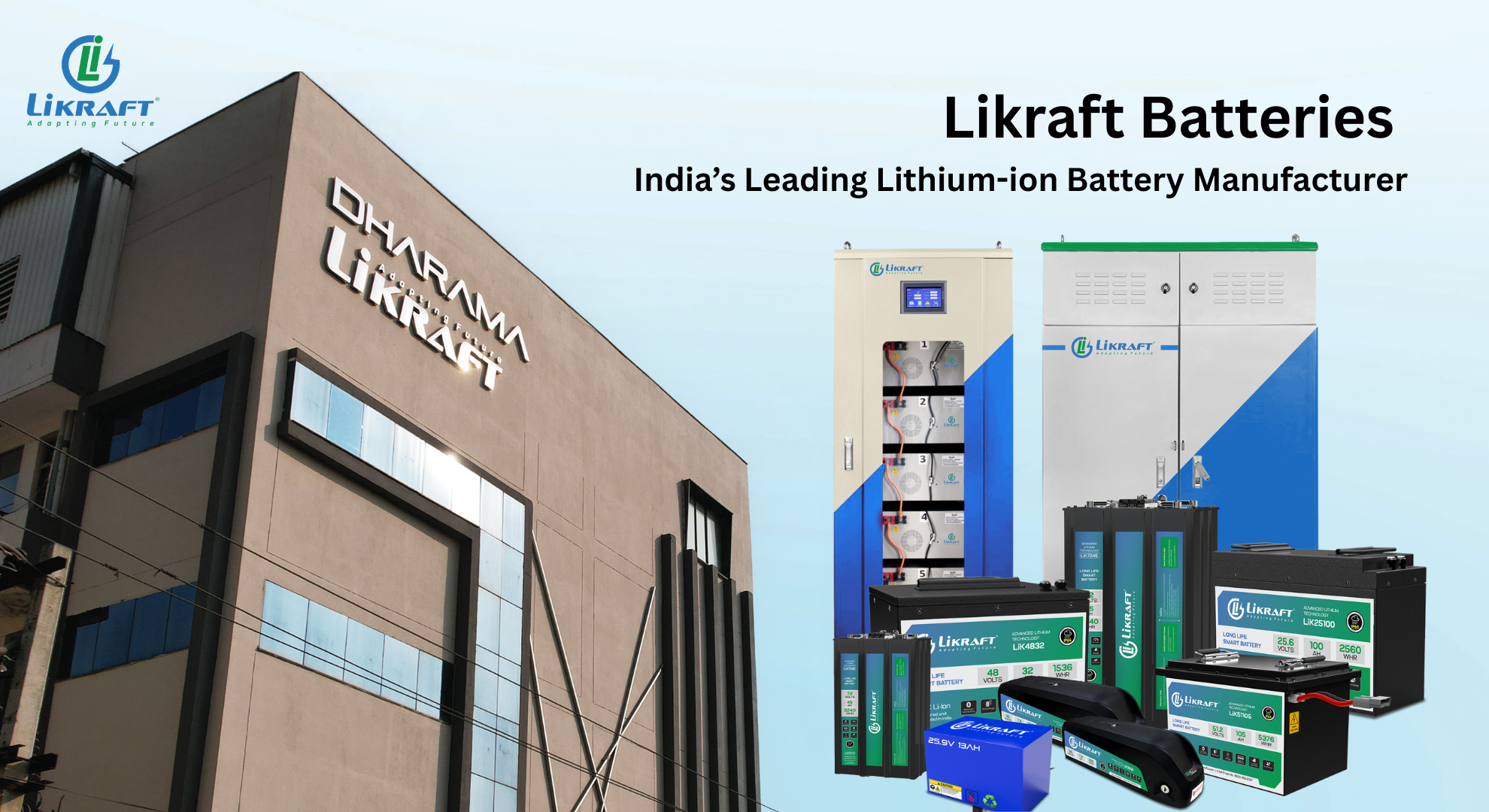
The demand for lithium batteries is growing across electric vehicles, solar energy storage, telecom infrastructure, and industrial applications. As businesses move towards efficient energy solutions, choosing the right lithium battery pack manufacturer in India has become an important decision.
A reliable manufacturer does more than assemble battery cells. It should understand your application, recommend the right battery specifications, integrate a suitable Battery Management System (BMS), and follow consistent testing and quality-control processes.
If you are an EV brand, OEM, distributor, or industrial buyer, here are the key factors to consider before selecting a lithium battery supplier.
1. Check the Manufacturer’s Industry Experience
Different applications require different battery designs. An electric two-wheeler battery, for example, has different power, space, and operating requirements from a telecom backup battery or an industrial energy storage system.
Look for a lithium battery pack manufacturer with experience in your target application. Check whether the manufacturer can support:
- Electric two-wheelers and three-wheelers
- E-rickshaws and electric loaders
- Solar and inverter battery systems
- Telecom backup batteries
- Commercial and industrial energy storage
- Custom battery packs for OEM applications
Application-specific experience helps ensure that the battery is designed around the equipment it needs to power.
2. Understand the Battery Chemistry
Battery chemistry influences energy density, cycle life, operating characteristics, and application suitability.
Lithium iron phosphate (LiFePO₄) is widely used in applications where long cycle life and thermal stability are important. Nickel manganese cobalt (NMC) batteries may be suitable where higher energy density is a priority.
The right choice depends on your operating conditions, available space, required range, budget, and performance expectations.
Before placing an order, discuss the intended application with your EV battery pack manufacturer in India and request the relevant product specifications.
3. Evaluate the Battery Management System (BMS)
The Battery Management System is a critical part of a lithium battery pack. It monitors battery parameters and helps protect the pack against conditions such as over-voltage, under-voltage, over-current, and excessive temperature, depending on its design.
For advanced applications, a BMS may also support communication protocols such as CAN or RS485, enabling data exchange with compatible controllers, inverters, or monitoring systems.
Ask the manufacturer about:
- Available protection functions
- Communication protocol compatibility
- Temperature monitoring
- Fault reporting and diagnostics
- Integration with your existing equipment
A suitable BMS helps improve battery monitoring and system integration.
4. Review Manufacturing and Testing Capabilities
Battery quality depends on more than the cells used. Assembly processes, electrical connections, insulation, enclosure design, and quality checks also matter.
Before selecting a custom lithium battery pack manufacturer, ask about its manufacturing process and testing facilities. Depending on the battery design, relevant checks may include voltage and capacity testing, insulation testing, communication verification, and protection-function testing.
Also verify the certifications and test reports applicable to the specific product and its intended use. Requirements can differ between EV, telecom, industrial, and stationary energy storage applications.
5. Check Customization and OEM Support
Standard battery models may not meet every business requirement. OEMs often need specific voltage, capacity, dimensions, connectors, communication protocols, or mounting arrangements.
A capable OEM battery manufacturer should be able to assess these requirements and confirm what can be supported by its design and production capabilities.
Before finalizing a supplier, share your application details, load requirements, available installation space, and expected operating conditions. This makes it easier to identify a suitable battery configuration.
6. Compare Total Value, Not Just Price
The lowest upfront price does not always provide the best long-term value. Battery performance, usable capacity, warranty terms, service support, and compatibility with the application should all be considered.
When comparing quotations, check:
- Voltage, capacity, and nominal energy
- Specified cycle life and test conditions
- BMS features and compatibility
- Applicable warranty coverage
- Installation and technical support
- Spare parts and after-sales arrangements
Compare specifications on an equivalent basis instead of relying on price alone.
Why Choose Likraft for Lithium Battery Pack Solutions?
Likraft Batteries Pvt. Ltd. provides lithium battery pack solutions for EVs, solar applications, telecom systems, and industrial requirements. The company supports application-specific battery configurations, with options depending on product design and project needs.
For businesses seeking an Indian lithium battery pack manufacturer, Likraft offers a range of battery solutions and support for OEM and customized requirements. Buyers can discuss their voltage, capacity, communication, and installation needs to identify a suitable configuration.
Visit Likraft to explore its battery solutions and discuss your application requirements.
Frequently Asked Questions
How do I choose a lithium battery pack manufacturer in India?
Evaluate application experience, battery chemistry, BMS features, manufacturing quality, testing capabilities, relevant certifications, customization options, and after-sales support.
What is the difference between a lithium battery cell and a battery pack?
A cell is an individual electrochemical unit. A battery pack combines cells with components such as electrical connections, a protective enclosure, and a BMS to meet a particular application’s requirements.
Can lithium battery packs be customized for OEM applications?
Yes. Depending on the manufacturer’s capabilities, battery packs can be configured for different voltage, capacity, dimensions, connectors, and communication requirements.
Which lithium battery chemistry is suitable for EVs and energy storage?
LiFePO₄ and NMC are two common options. Suitability depends on energy density, cycle-life requirements, operating conditions, space, and cost.
Conclusion
Choosing the right lithium battery pack manufacturer is essential for reliable performance, system compatibility, and long-term value. Businesses should assess technical capabilities, testing procedures, customization options, and service support before making a decision.
For EVs, solar systems, telecom infrastructure, and industrial equipment, the right battery partner can help match the battery design to the application’s actual requirements.
Contact Likraft to discuss lithium battery pack solutions for your business.
Send us an email at info@likraft.com.
Address: Rai Industrial Area, Sonipat, Haryana